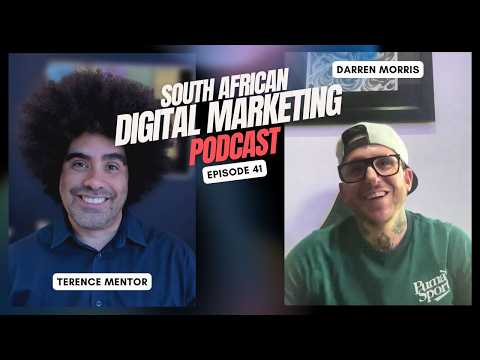
 30 min · Watch the episode
Listening is always free. Watch on YouTube, Spotify, or Apple Podcasts.
What this episode is about
Lucky Hustle has just taken Small Agency of the Year at the 14th Wesbank New Generation Awards for the second year in a row, which Darren Morris believes nobody has done before. Their Xiaomi Titan Tough campaign took the highest score of the night, 93%, across every category, against rooms that included Ogilvy, VML and Clockwork. Darren has been on the show before, talking about AI and the trends he saw coming for 2026. This time we wanted the business underneath the work.
The question we put to him: are we now in the era of the small agency, and should in-house marketers be looking past the big names? His answer runs both ways. The tools have changed what a team of 25 can take on, and clients have noticed. But he is just as quick to say what a small agency still cannot do, and what happens to the ones that forget.
Three things we took away
- Small is a position now, not a waiting room. Awards still size an agency by staff count, which puts Lucky Hustle, at around 25 people, in the small category five years in. Darren's point is about what clients actually buy: "Traditionally big brands would always think, I need a big agency, I need a big global name. It's not the case anymore." What matters instead is "who is that handful of people that's working on your brand." In a small shop the client knows everyone on their business, from the ops manager to the graphic designer, and the people doing the work wear several hats rather than one.
- What the big agencies still have is money and heritage. He is fair about why brands went big for decades. The long marriages are real: FCB had Toyota for about 60 years, Penquin has had Suzuki for around 20. And big corporates pay late by design — he mentions terms as long as 95 days — so they want an agency that can carry a national campaign until the invoice clears. "Small agencies simply cannot do that." AI has shifted the ratio, because "you don't need 10 people to do this for 10 days… you now need two people, a couple of software, and you can have it out in three days." But he is blunt about the limit: if a bank the size of Absa asked Lucky Hustle to pitch for its whole business, "we would absolutely fail." He has watched agencies take on account after account "until the house of cards just fell."
- The more monster, and the case for pausing. The most useful part of the conversation is the bit that argues against growth. Darren calls the industry's appetite the more monster: "It's never enough." Ask him where Lucky Hustle will be in five years and the answer is not bigger. "It's about sustaining what you have" — keep the staff, keep the clients, keep the lights on. He points out that the late nights usually come from pitching and award entries rather than client work, and that client churn robs everyone: an agency that loses an account after "a long healthy three years" is losing it exactly when "you've just started to understand the brand. That's just when you start to do the good work." His advice for marketers choosing an agency follows the same logic. Check they can carry the work financially, then look hard at the people, because the ones who agree with everything you say will sink your brand politely.
Our guest: Darren Morris, founder of Lucky Hustle. Connect with Darren on LinkedIn.
Want a straight answer on your own marketing?
I'm Terence, the host. Through TM Digital I look at what businesses spend on marketing and tell them what's working. I don't sell the work, so I can judge it honestly.